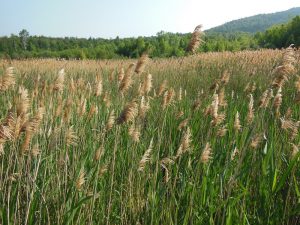
Some common examples of Weeds and Reeds found in South African dams.
southern african aquatic Weeds
DuckWeed
Is the smallest of aquatic waterweed, it is only about 5mm in size and is a free-floating weed, growing in clusters and looks like a green carpet over the water. It is extremely fast growing.
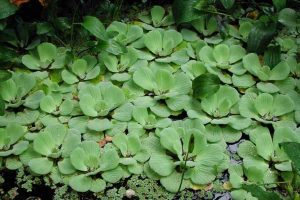
WATER LETTUCE
The entire plant resembles a small, floating, open head of lettuce. It rapidly forms dense mats covering the entire waterway. Water Lettuce increases water loss, is a breeding zone for mosquitoes and degrades water quality.
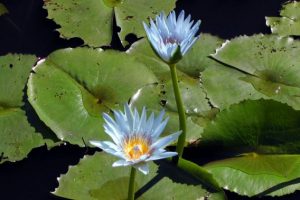
day waterlily
This aquatic plant with round, floating leaves have underground stems which are firmly anchored to the mud under water by means of rather thick, spreading roots. The large flowers are carried on long stalks just above the surface of the water and may be white, yellow, blue or pink in colour and open only in sunshine. Waterlily can totally invade slow-running waterways or dams, choking out native plants and slowing water flow. Water lily can also stop all recreational use of the waterway.
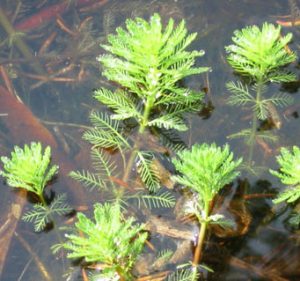
DENSE WATER WEED
A submerged aquatic plant with slender stems up to 3m long. Green, finely serrated leaves 15-30mm long in whorls of 4-5, sometimes 3-8. Yellow or cream flowers appear on long stalks about 20mm above the water surface. This aquatic plant invades still or slow-moving water in dams and lakes.
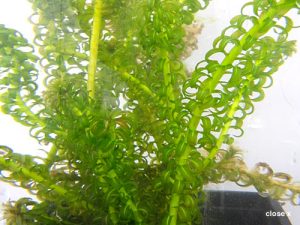
COARSE OXYGEN / CURLY WATER WEED
It grows underwater and is attached to the bottom by roots. Its leaves are arranged in spirals along the stem and are very curled. The stem is hollow and brittle, and can grow up to 6.5m long. Curly waterweed is very difficult to control, and its ability to form new plants from small fragments means that it is easily spread to new locations. They form thick, dense mats that block out light. The thick mats also prevent oxygen from entering the water, drastically reducing oxygen levels, which may kill fish and other aquatic life.
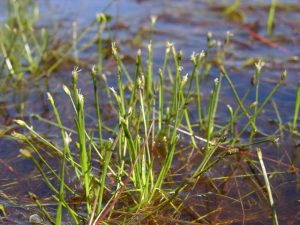
FINE WATER WEED
Slender, aquatic or dry-land perennial sedge. Stems weak and leafy, submerged and elongated or creeping and tufted. Annual or short-lived perennial, forming diffuse to dense floating or terrestrial mats. Roots minute, rhizomes thread-like, green above ground.
Fine water weeds are fast growing and spread drastically creating thick mats that will block out light and reduce oxygen levels in water if not controlled.
PARROTS FEATHER
A spirally leafed, aquatic plant capable of forming dense infestations in waterways with pale green, finely divided, feather-like leaves arranged in whorls. Tiny, solitary, inconspicuous cream flowers forming in the axils of the leaves from May-September. It invades still or slow-moving water on the banks of rivers, lakes and ponds.
southern african aquatic reeds
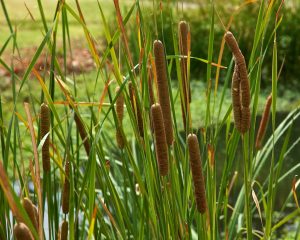
BUlrushes
Rushes are distinguished by cylindrical stalks or hollow, stemlike leaves. The tall reed-like water plant with strap-like leaves and a dark brown velvety cylindrical head of numerous tiny flowers grows in or next to water in very moist soil. Is an erect weed-like perennial growing up to 4m tall. Leaves growing in bunches from below water level, reaching 60cm-3m long. Flowering stems grow erect from the middle of the leaf cluster.
Bullrush interfere with the water flow, reduce water quality and provides breeding places for vermin and mosquitoes.
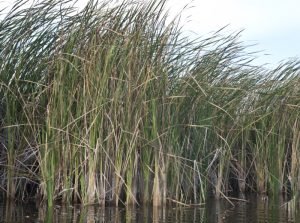
SAW GRASS
Sawgrass is a tall plant that if examined closely will reveal tiny ridges, or teeth, along the length of its sides.
Saw grass is a genus of large sedges with a nearly worldwide distribution in tropical and temperate regions. These are plants characterised by long, narrow (grass-like) leaves having sharp, often serrated (sawtooth-like) margins, and flowering stems 1–3 m tall. Like many plants found in wet habitats, it has deeply buried rhizomes that can produce tall shoots with dense canopies.
GIANT REED
Is a perennial grass that can reach up to 6.1 m in height. The stem resembles a corn stalk. FoliageLeaves are long, flat and grow up to 0.5 m long. The plant spreads through rhizomes and stem nodes that come in contact with the soil. Giant reed invades wetlands such as ditches, stream banks and lake shores.
Giant Reed competes for water, nutrients and radiation, suppresses and excludes native vegetation which degrades wildlife habitat, increases fire risks and interferes with flood control.
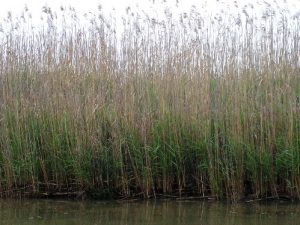
COMMON REED
Phragmites is a tall, warm-season perennial grass with featherlike plumes at the top of its stems. It can reach heights of up to 12 feet. Although common reeds are native to much of the world, highly aggressive strains that form dense stands that will take over dams and waterways.